What the Hell is a Jarbidge?
October 14, 2025

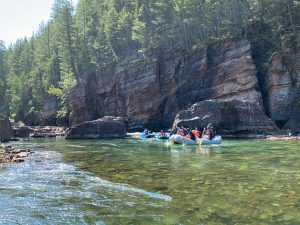
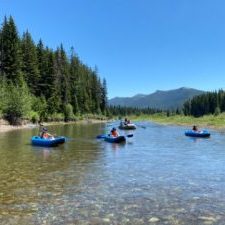
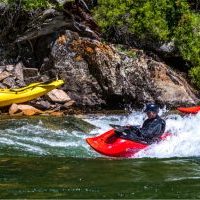
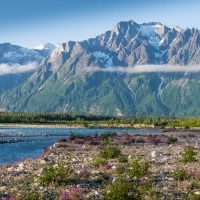
The Jarbidge river flows from its headwaters in the Jarbidge mountains of Nevada into the southern desert of Idaho. This river is famous for its hoodoos and caves, rousing whitewater and springtime ground fireworks (wildflower eye-candy explosions). DON’T BRING FIREWORKS-they are natural, non-flammable and free of charge here in the spring. The Jarbidge is a tributary to the Bruneau River and the two become one on the Owyhee Desert Plateau. When paired together, you have a contiguous stretch of an incredibly remote and scenic, wilderness river trip.
Occasionally it is important to revisit etymology and question the origins of the stories we share and tell when traveling through wild landscapes -or truly any landscape, cultural or otherwise. The word Jarbidge makes it easy to get curious. In my eyes, and in this day and age, we all could use more curiosity to understand one another better.

So, in parts of Idaho, or small niche places where kayakers and rafters roam, you may see a bumper sticker that boldly asks, “What the hell is a Jarbidge?” It’s meant to be funny, of course, but upon deeper reflection and research, one will find a less funny origin story if they are asking the right questions. The important question to ask is whose story is this to tell, and where did I hear it.
The word Jarbidge has a lot of ambiguity in its evolution from a Shoshone word that described a character from a legend of an evil spirit or monster ‘Tswhawbitts’ that inhabited the caves and canyons in the region. This word is reported to be pronounced “tuh-saw-haw-bits”. Historians (almost certainly white) believe the word Jarbidge was a bastardization of the Shoshone word that white gold miners heard as ‘ja-ha-bich’. These miners heard and ultimately wrote into history the word: Jarbidge. So there you have it. People floated on this namesake river for years and years without correcting the anglicized word, and named a mountain range, and small town in honor of a white understanding of a word that isn’t theirs.

The available resources online (either not advertised or explicitly not written by Tribe members) tell the inquirer this story- the Jarbidge mountains and canyon lands were the home to a cannibalistic giant. He would catch people in his basket and take them away to gobble them up. The “hills”, now known as the Jarbidge mountains, were a place the Shoshone avoided because of this evil haunting. It wasn’t until gold was found in the mountains, around 1908, that a mining settlement was established. This town is modern day Jarbidge, Nevada.
When white miners interfaced with Shoshone Tribe members, the word Jarbidge was born. All of the information I was able to find about this story online seemed to be written by white journalists and organizations. If an author wasn’t listed, I assumed this was the case- but I would love to be proven wrong. The first blaring reality is that it’s near impossible/impossible to find the story told first hand by the culture that told it originally. Why? And who likely or possibly benefits from the retelling of the story? These are the questions we all need to ask. Is the Jarbidge a mindless branding of a landscape because it sounds cool, or is someone reaping the benefits of a story that isn’t theirs? We could all make an educated assumption. What is clear is that when we travel through traditional Tribal lands it is important not to claim ownership to someone else’s story, and to pay proper respects to the culture that preceded. With this vantage point, the bumper sticker that was meant to be humorous feels incredibly ignorant.

For better or worse culturally, the name on maps and signs remains the gold miner version-Jarbidge. It’s easy to remain curious about the limited findable lore of this evil spirited giant that gobbles up humans. Why didn’t he make dinner out of the miners who threatened his home in the mountains? I wonder what it was like for the Shoshone people who may have changed their paths of travel accordingly, to keep away from the devil’s evil. Did they use him as a threat to their kids when they weren’t behaving? Did their kids misbehave much at all? In one white retelling of the story, the author claims to have been friends with a Shoshone man named Albert who told him that the Tswhawbitts was not to be feared, but simply misunderstood and trying to survive just like everyone else. We would all be so lucky to have someone who truly knows the story set us all straight.
Curiosity is a moral responsibility when traveling through traditional Tribal lands, but no one is entitled to the answers they seek.

When someone asks you “What the hell’s a Jarbidge?”, you are getting a glimpse of a weathered etymology, and the remains of a Shoshone legend survived by the lands of the wicked Tswhawbitts. Remember when traveling through the Jarbidge-Bruneau lands, you are traveling on the ancestral homeland of the Shoshone, Bannock and Northern Paiute peoples.

Photos by, Dove Miller
 Featured Trip